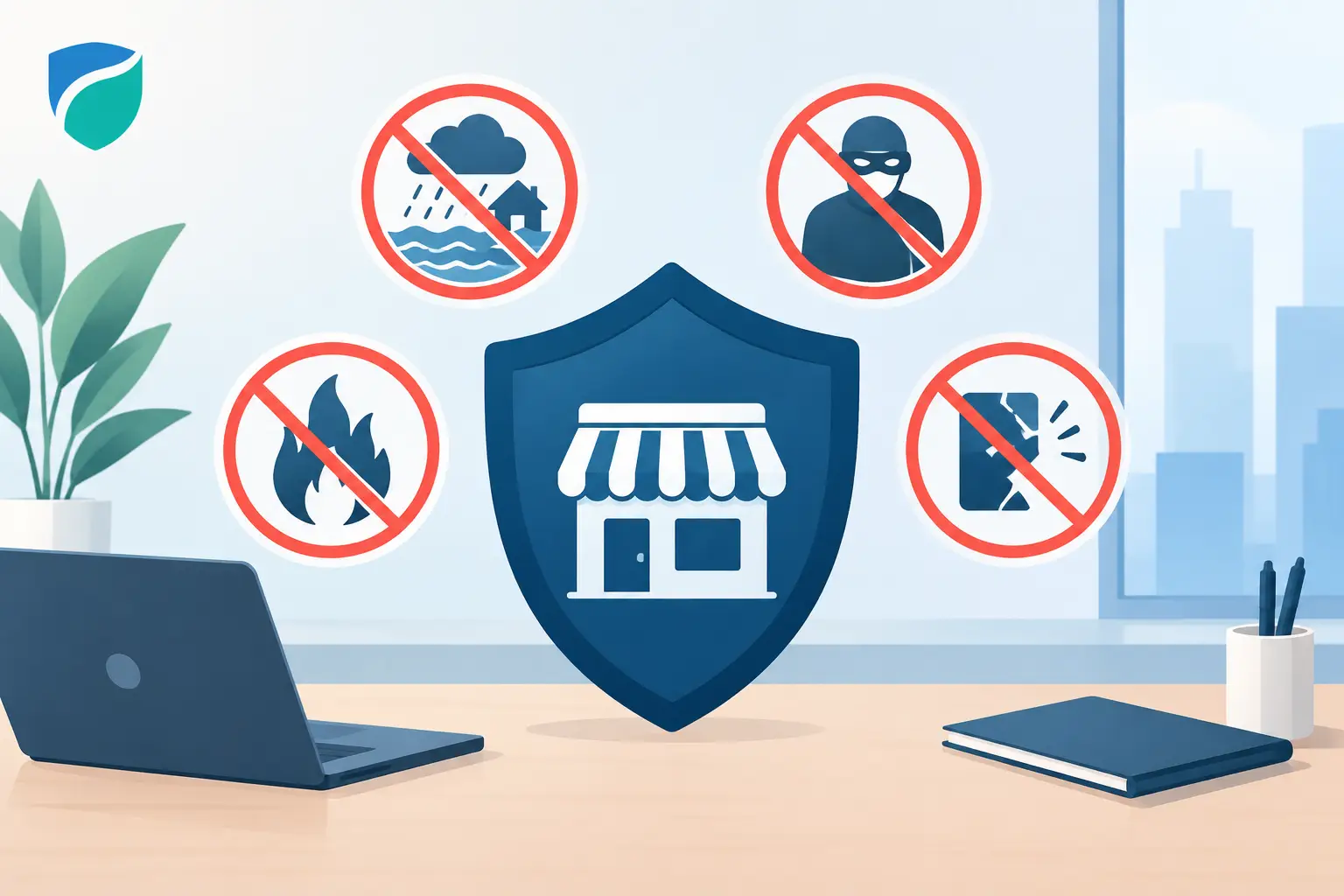
A policy can look complete on the declarations page and still leave a business exposed when a loss occurs. That is why understanding common business insurance exclusions matters as much as comparing limits, deductibles, and premiums. An exclusion is simply a situation, type of property, cause of loss, or cost the policy does not cover. It is not always a mistake or a hidden surprise, but it can become an expensive gap if it does not match the way your business actually operates.
For small and mid-sized business owners, the goal is not to buy every available policy. It is to identify the risks your business cannot comfortably absorb and make informed decisions about the coverage, endorsements, or separate policies that may address them.
What Are Business Insurance Exclusions?
Insurance policies are designed around defined risks. A Business Owners Policy, commercial auto policy, workers’ compensation policy, or professional liability policy each has a specific purpose. Exclusions help carriers set clear boundaries around that purpose and price the coverage accordingly.
Some exclusions apply because another policy is meant to cover the risk. Others exist because a loss is too broad, too difficult to predict, or outside the type of protection purchased. The wording matters. An exclusion may apply only in certain circumstances, while an endorsement may add limited coverage back.
That is why it helps to review exclusions with an advisor before there is a claim. The question is not just, “Am I insured?” It is, “Am I insured for the way I earn revenue, use property, serve customers, and manage employees?”
Common Business Insurance Exclusions That Create Gaps
Flood, earth movement, and other location-based losses
Commercial property coverage often protects a building, equipment, inventory, and furnishings after covered events such as fire, theft, or certain weather damage. However, flood is commonly excluded. Damage caused by surface water, overflowing waterways, or storm surge may require separate flood coverage.
Earthquake, sinkhole activity, landslide, and other earth movement may also be excluded or restricted. The exact terms depend on the policy and location. A business does not need to be near a coast to face flood risk. Heavy rain, poor drainage, snowmelt, and nearby construction can all create water problems.
Business interruption coverage can be affected too. If the underlying property loss is excluded, the income lost while the business is closed may also be excluded. Property owners, landlords, and businesses with valuable inventory should look beyond the building’s location and consider how water could enter the property.
Wear and tear, maintenance, and gradual damage
Insurance is intended for sudden, accidental losses, not ordinary upkeep. As a result, many policies exclude wear and tear, rust, corrosion, deterioration, mechanical breakdown, and damage that develops over time.
For example, a roof that has reached the end of its useful life is generally a maintenance issue. A pipe that slowly leaks behind a wall for months may create a more complicated claim than a pipe that suddenly bursts. Some resulting water damage may be considered differently than the failed pipe itself, but that depends on the policy language and facts of the loss.
This is one of the most practical exclusions to manage. Document maintenance, inspect roofs and plumbing, service equipment, and address small leaks quickly. For businesses that depend on refrigeration, production machinery, or specialized equipment, equipment breakdown coverage may be worth discussing. It can address certain electrical or mechanical failures that a standard property policy may not cover.
Professional mistakes and missed services
General liability insurance commonly helps with claims alleging bodily injury, property damage, or personal and advertising injury. It does not usually cover financial loss caused by professional advice, design work, errors, missed deadlines, or services that did not meet a client’s expectations.
A consultant who gives incorrect advice, an accountant who makes an error, a contractor accused of faulty design, or a real estate professional accused of a costly omission may need professional liability coverage, also called errors and omissions insurance. The right fit depends on the services provided, contracts signed, and potential size of a client loss.
The distinction can be confusing because one incident may involve both property damage and professional services. A general liability policy and professional liability policy can work differently, so business owners should not assume one automatically replaces the other.
Employee dishonesty and certain criminal acts
Theft by an outside party may be covered under a commercial property policy, subject to the policy’s terms. Theft or dishonest acts by an employee, however, are often excluded or limited unless the business has employee dishonesty or crime coverage.
Crime coverage can be especially relevant for businesses that handle cash, make electronic payments, manage client funds, carry valuable inventory, or give employees access to bank accounts. It may address risks such as employee theft, forgery, funds transfer fraud, and social engineering fraud, but every coverage form has its own conditions and limits.
Internal controls remain essential. Dual approval for payments, account reconciliation, separation of financial duties, and verification procedures for payment-change requests can reduce the chance of a loss. Insurance is a financial backstop, not a substitute for sound controls.
Cyber incidents and electronic data loss
Many business owners assume a property or liability policy will pay for a data breach because computers are business property. In many cases, it will not cover the full cost of a cyber event. Electronic data, ransomware, breach notification expenses, legal defense, regulatory issues, business interruption caused by a network outage, and fraudulent transfers may require cyber liability coverage.
The appropriate coverage depends on what your company stores and how it operates. A retailer processing card payments, a medical office handling protected health information, a contractor using cloud-based estimating tools, and a small employer with payroll records all have different exposures.
Cyber coverage should be paired with practical safeguards: multi-factor authentication, secure backups, employee phishing training, software updates, and a clear procedure for responding to suspicious emails. Insurers may also require specific security measures before certain claims are covered.
Vehicles, employee driving, and property in your care
A personal auto policy is not designed for all business use. If vehicles are titled to the business, used for deliveries, carry tools or inventory, or are regularly driven by employees, commercial auto coverage may be necessary. Even when employees use their own vehicles, the business can face liability after an accident connected to work. Hired and non-owned auto liability can be an important consideration in that situation.
Automotive businesses have a separate concern. A repair shop, dealership, towing operation, or service garage may have customers’ vehicles in its care, custody, or control. Standard liability coverage may not protect the customer’s vehicle from damage while it is being serviced, stored, or moved. Garage keepers insurance is designed for that exposure.
The same care, custody, or control concept can affect other businesses. Contractors, installers, and service providers should ask how the policy responds when a client’s property is in their possession or being worked on.
Contractual promises, known losses, and intentional acts
Business contracts can create responsibilities beyond what an insurance policy automatically covers. A lease, vendor agreement, construction contract, or client agreement may require specific insurance limits, additional insured status, waivers of subrogation, or liability assumed under contract. Not every contractual promise is insured, even if the contract says your business is responsible.
Policies also generally do not cover intentional wrongdoing, expected or intended injury, or losses that were known before coverage began. Insurance is meant to respond to unforeseen events, not to transfer responsibility for deliberate conduct or an existing problem.
This does not mean a claim is automatically denied whenever an allegation is made. Legal defense and coverage questions can be fact-specific. It does mean that contracts and policy terms should be reviewed together rather than handled as separate paperwork.
How to Review Exclusions Before They Become a Claim
Start with your actual operations, not a generic checklist. Consider where you work, what property you own or hold for others, whether employees drive, what customer information you collect, and which interruption would hurt cash flow most. Then compare those exposures with the policies you have.
Ask for clear answers to a few practical questions: What losses are specifically excluded? Which exclusions can be modified by endorsement? Is a separate policy available? What deductible, limit, waiting period, or security requirement applies? A lower premium can be the right choice when the business can absorb the excluded risk. It is a poor trade-off when one uncovered event could disrupt operations or threaten personal assets.
Keep your advisor informed as the business changes. Adding a location, hiring drivers, storing client property, expanding online sales, purchasing equipment, or signing a larger contract can change the coverage conversation quickly. Choice Insurance Company can compare options from multiple carriers and explain the differences in plain English, so coverage decisions are based on your real exposure rather than assumptions.
The best time to question an exclusion is while you still have options. A focused policy review now can give you clearer expectations, stronger protection, and fewer unwelcome surprises when your business needs insurance most.