
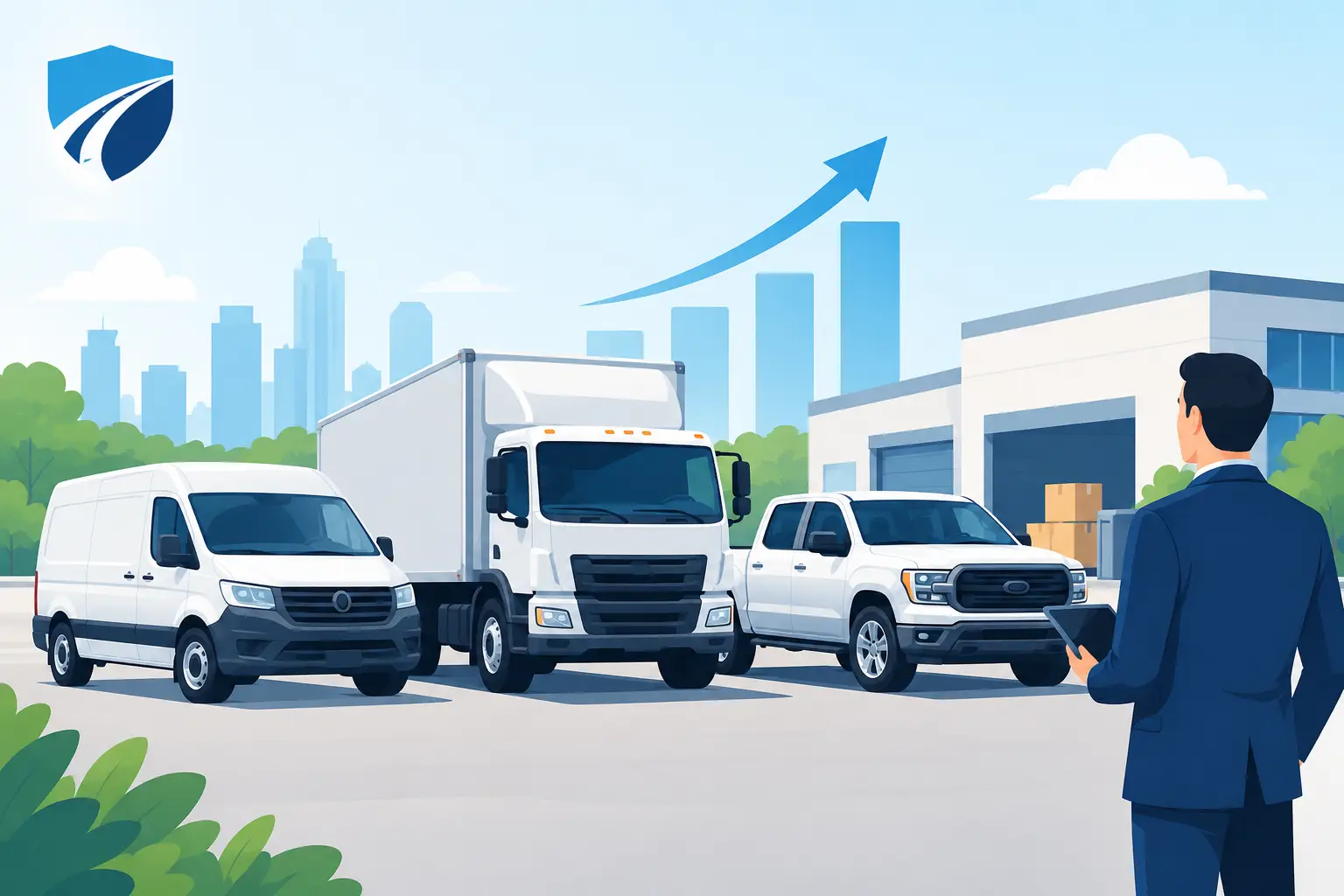
A delivery driver backs into a customer’s fence. An employee is rear-ended while traveling between job sites. A work truck is stolen overnight with tools inside. None of these situations are unusual, but each can create costs that reach far beyond a vehicle repair bill. Commercial auto insurance is designed to protect your business when vehicles are part of the workday.
For many small and mid-sized businesses, the hard part is not recognizing the need for coverage. It is understanding what the policy actually protects, where personal auto insurance stops, and how much coverage makes sense for the way the business operates. Clear answers matter because the least expensive policy is not always the one that will stand up when a serious claim occurs.
When Commercial Auto Insurance Is Needed
A personal auto policy is generally built for personal errands, commuting, and ordinary household use. Once a vehicle is regularly used to transport products, equipment, employees, clients, or materials for business purposes, commercial coverage may be necessary.
The vehicle does not have to have a company logo or be titled in the business name. A sole proprietor using a pickup for landscaping work, a real estate investor driving between properties, or an employee using a personal car for client visits may all have business-related auto exposure. The details of the vehicle use, ownership, drivers, and industry determine the right approach.
Commercial auto insurance is common for contractors, delivery businesses, cleaning companies, restaurants, property managers, sales teams, transportation providers, and automotive businesses. It can also be a practical fit for businesses with only one vehicle. A one-truck operation still faces the same liability risk as a larger fleet if that truck causes a serious accident.
What a Commercial Auto Policy Can Cover
The core purpose of commercial auto coverage is simple: it helps pay for covered losses involving vehicles used in your business. Policies can be tailored, but most include several key protections.
- Liability coverage may pay for injuries or property damage your driver causes to others in an accident. It can also help with legal defense costs when a covered claim leads to a lawsuit.
- Collision coverage may help repair or replace a covered vehicle after a collision with another vehicle or object, regardless of fault.
- Comprehensive coverage may respond to non-collision damage, such as theft, vandalism, fire, hail, falling objects, or animal strikes.
- Uninsured and underinsured motorist coverage may help when another driver causes an accident but has little or no insurance available.
- Medical payments or personal injury protection, where available, may help with certain medical expenses for the driver and passengers.
Additional options may be just as important as the standard coverages. Hired and non-owned auto liability can protect the business when employees rent vehicles or use their own vehicles for work. Rental reimbursement and towing coverage can help keep operations moving after a covered loss. New vehicle replacement, roadside assistance, and coverage for permanently attached equipment may also be available depending on the carrier and vehicle type.
One distinction deserves special attention: a commercial auto policy often covers the vehicle and liability arising from its use, but it may not cover every item carried inside. Tools, inventory, and customer property can require separate coverage through a business owners policy, inland marine coverage, cargo coverage, or a specialized endorsement. The right answer depends on what is being transported and who owns it.
Liability Limits Matter More Than Many Owners Expect
State minimum liability limits may satisfy legal requirements, but they can be far below the cost of a major accident. Medical bills, lost income, property damage, and legal expenses can add up quickly, especially when a business vehicle is involved in a multi-car crash or injures someone seriously.
Many business owners choose higher liability limits to better protect company assets and personal finances. An umbrella policy may provide an added layer of liability protection above the limits on commercial auto and other underlying policies. This is particularly worth discussing for businesses with substantial assets, frequent driving, larger vehicles, or contracts that require specific liability limits.
The Drivers Can Be as Important as the Vehicles
Insurance carriers look closely at who gets behind the wheel. A policy should list regular drivers accurately and reflect how each vehicle is used. Allowing an unlisted or unauthorized person to drive can create complications during a claim and may violate company driving rules.
A practical vehicle policy can reduce avoidable risk. Set clear expectations for seat belt use, phone use, impaired driving, speeding, vehicle inspections, and reporting accidents. Review motor vehicle records when hiring drivers and periodically afterward, especially for employees who drive regularly.
This does not mean every small business needs a complicated fleet-safety program. It does mean that a simple, documented process can make a meaningful difference. Safe driving protects people first, and it can also help control claims and future insurance costs.
What Affects the Cost of Commercial Auto Insurance?
There is no single price for commercial auto coverage. Premiums are based on the risk the insurer is taking on, not just the number of vehicles you own. A local electrician with one cargo van will be rated differently than a regional contractor with several pickups and trailers.
Insurers commonly consider the type and value of vehicles, where they travel, annual mileage, vehicle use, driver records, claims history, years in business, coverage limits, deductibles, and the type of goods or equipment carried. A vehicle used for local service calls may cost less to insure than one that travels long distances, delivers goods on tight schedules, or carries hazardous materials.
Higher deductibles can lower the premium, but they also increase what your business pays out of pocket after a covered physical damage claim. Lower limits may reduce the upfront cost, but could leave a larger financial gap after a serious accident. The best choice is usually the one that fits your cash flow while protecting against losses your business could not comfortably absorb.
Bundling commercial auto with other business coverage can sometimes create savings and simplify policy management. Still, convenience should not replace a careful review. The vehicles, drivers, and business activities need to be described accurately for the coverage to work as intended.
Common Gaps That Create Problems at Claim Time
Coverage gaps are often created by ordinary business changes that were never reported to the insurance carrier. A new employee starts driving. The company buys a trailer. An owner begins using a personal vehicle for regular client visits. A business expands into another state or adds delivery services. Each change can affect coverage and pricing.
Vehicle ownership is another area to review. A vehicle titled personally but used by the business may need a different arrangement than a vehicle owned by the company. Likewise, a vehicle leased or financed may have physical damage requirements set by the lender or leasing company.
Automotive businesses have specialized concerns. A repair shop, dealership, or towing operation may need garage liability or garagekeepers coverage in addition to commercial auto insurance. Garagekeepers coverage can help protect customers’ vehicles while they are in your care, custody, or control for covered losses. It is not automatically included in a standard commercial auto policy.
How to Choose Coverage With Confidence
Start with a straightforward inventory of every vehicle connected to your work, including owned vehicles, leased vehicles, trailers, rentals, and employee-owned vehicles used for business. Then identify who drives, how often they drive, what they carry, where they travel, and whether any customer or contract requirements apply.
Next, look beyond the premium. Ask what liability limits are being quoted, whether physical damage is included, what deductibles apply, and which drivers and vehicles are covered. Ask specifically about hired and non-owned auto coverage if employees ever run errands, visit clients, or rent vehicles for work.
An independent broker can compare options from multiple carriers and explain the differences in plain English. At Choice Insurance Company, the goal is not to push a one-size-fits-all policy. It is to help you see the trade-offs clearly, match coverage to your actual operations, and make decisions with confidence.
Commercial auto insurance should change as your business changes. Review it before adding vehicles, hiring drivers, taking on new territories, or signing a contract with insurance requirements. A short conversation before the change can be far easier than discovering a gap after an accident.